
808nm Diode Laser Hair Removal: The Ice-Contact Mainstream Explained
808nm diode is the mainstream professional hair-removal wavelength — balanced absorption and penetration with contact cooling for comfortable sessions.
What Is 808nm Diode Laser Hair Removal?
808nm diode hair removal uses semiconductor laser arrays centred on the 808 nm wavelength (often labelled 800-810 nm) and is the mainstream wavelength for professional hair removal worldwide. 808 nm sits at the balance point of the melanin absorption curve and penetration depth: absorbed efficiently by follicular melanin while reaching the hair bulb in the deep dermis. Combined with contact cooling it delivers the “ice” experience suitable for full-body work, underarms, bikini lines and male beards.
How It Works: Why 808nm Became the Mainstream
The target is follicular melanin: absorbed light converts to heat that destroys follicular stem cells and the dermal papilla, pushing the hair into catagen. Wavelength sets the trade-off between absorption and penetration:
- 755 nm alexandrite: strongest melanin absorption, excellent on fair skin, shallower penetration and higher risk on darker skin
- 808 nm diode: the balance point usable across most phototypes; diodes offer high electro-optical efficiency, enabling high-power, fast gliding treatment (see 808 nm diode laser)
- 1064 nm Nd:YAG: deepest penetration, weakest absorption — the safe choice for dark skin at the cost of more discomfort
A representative platform (1200W808-class) runs about 1200 W system power with multi-bar diode arrays, 1-10 Hz repetition, and TEC + sapphire contact cooling around -3°C to +10°C, with HR hair-removal and SR skin-rejuvenation modes. Cooling is central to both comfort and safety — pre-chilling the epidermis markedly reduces pain and burn risk.
Why Hair Removal Requires Multiple Sessions: the Follicle Cycle
Laser energy only works on follicles in the anagen (growth) phase — catagen and telogen hairs lack the melanin anchor. Because follicles cycle asynchronously, each session clears the anagen fraction present that day:
- Standard course: 3-6 sessions (most platforms start at 3-5) spaced 4-8 weeks apart; faces cycle faster than limbs
- Visible rhythm: density and growth rate fall after 1-2 sessions; residual follicles enter long dormancy after the course
- Maintenance: 1-2 touch-ups per year is common; hormonal fluctuations (PCOS, puberty, menopause) may require reinforcement — see the follicle cycle
Results depend on hormones, body area and phototype; “permanent hair removal” is not a compliant claim — the correct term is permanent hair reduction.
Versus Alexandrite and IPL
| Dimension | 808nm Diode | 755nm Alexandrite | IPL/OPT |
|---|---|---|---|
| Phototype coverage | Most phototypes | Best on fair skin (see 755 nm alexandrite) | Fair to medium |
| Speed | Large spot + high frequency; fastest for full body | Moderate | Slower small spots; suits small areas |
| Comfort | Lowest tier with contact cooling | Moderate | Gentle but needs more sessions |
| Clinic fit | Primary hair-removal workhorse | Fair-skin clinics (see diode vs alexandrite) | Secondary function of photofacial platforms (see OPT/DPL photofacial) |
Treatment Flow and Course Design
- Assessment: phototype, hair calibre, area charting; no sun exposure, plucking or waxing for 4 weeks (the follicle must keep its melanin)
- Prep: shave to a 1-2 mm stubble
- Treatment: gliding or stamping with contact cooling; both lower legs 15-30 minutes, full body 60-90 minutes
- Aftercare: perifollicular oedema fades within hours; moisturise, protect from sun, avoid high-heat exercise the same day
For pricing and room planning see hair-removal centre configuration; intimate areas carry their own protocols — see bikini-line hair removal and facial hair removal in women.
Side Effects and Contraindications
- Common transient reactions: perifollicular redness and mild stinging, fading within hours to a day
- Low-probability risks: epidermal burns or blistering from excessive parameters; rarely paradoxical hypertrichosis (counsel for facial treatments); PIH or hypopigmentation, mainly in darker or recently tanned skin
Contraindications: pregnancy and lactation; active infection, open wounds or recent sunburn in the area; photosensitive disorders or photosensitising medication; oral isotretinoin within 6 months; malignant or suspicious lesions; imminent intense sun exposure; caution with keloid tendency.
End-Market Price Ranges
| Market | Reference range per session (lower legs or full face) | Notes |
|---|---|---|
| United States / Canada | $150-$500 | Six-session body-area packages standard |
| Western Europe | €100-€400 | Chain brands price transparently |
| China (Tier 1-2 cities) | $40-$280 (¥300-¥2,000) | Priced per body area; annual cards dominate |
| Southeast Asia | $50-$250 | Aggressive full-body package competition |
These are end-market retail references only; prices vary with body area, provider and course structure. They describe market pricing structure, carry no price commitment, and are unrelated to LEIJEX equipment pricing.
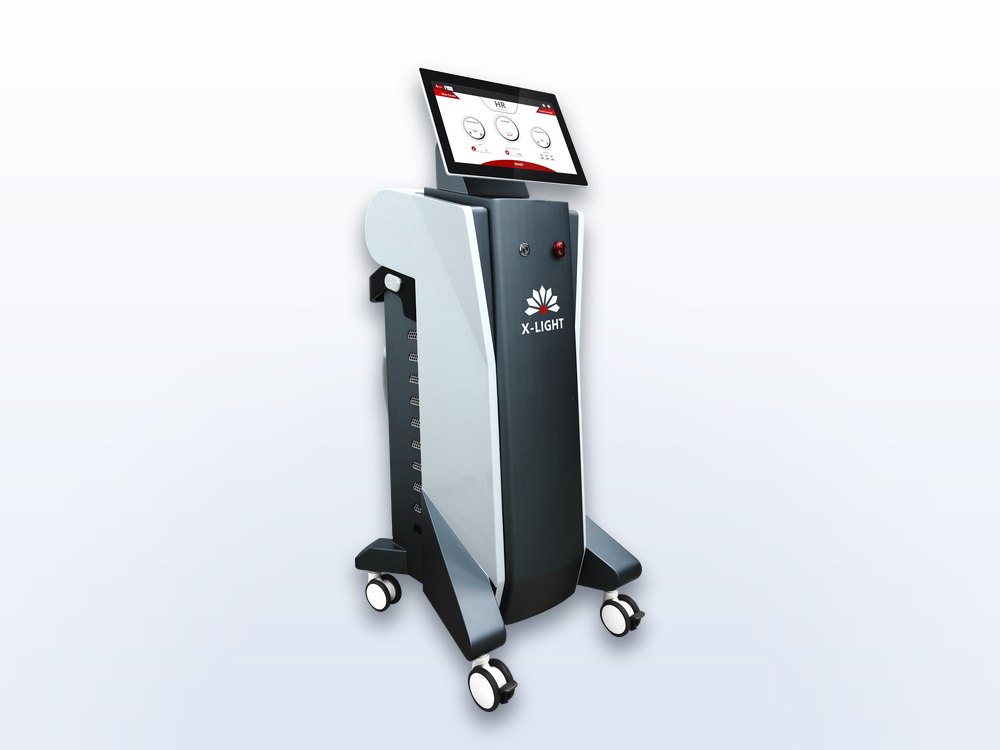
1200W808 Diode Laser Hair Removal
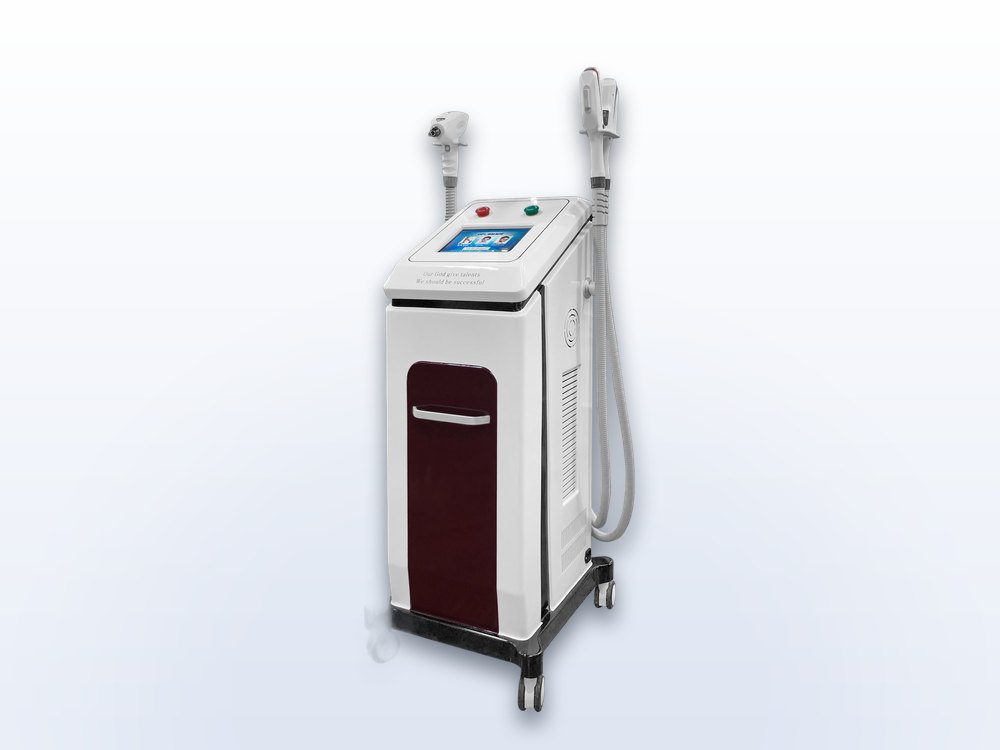
DPL + Nd:YAG Combination Platform
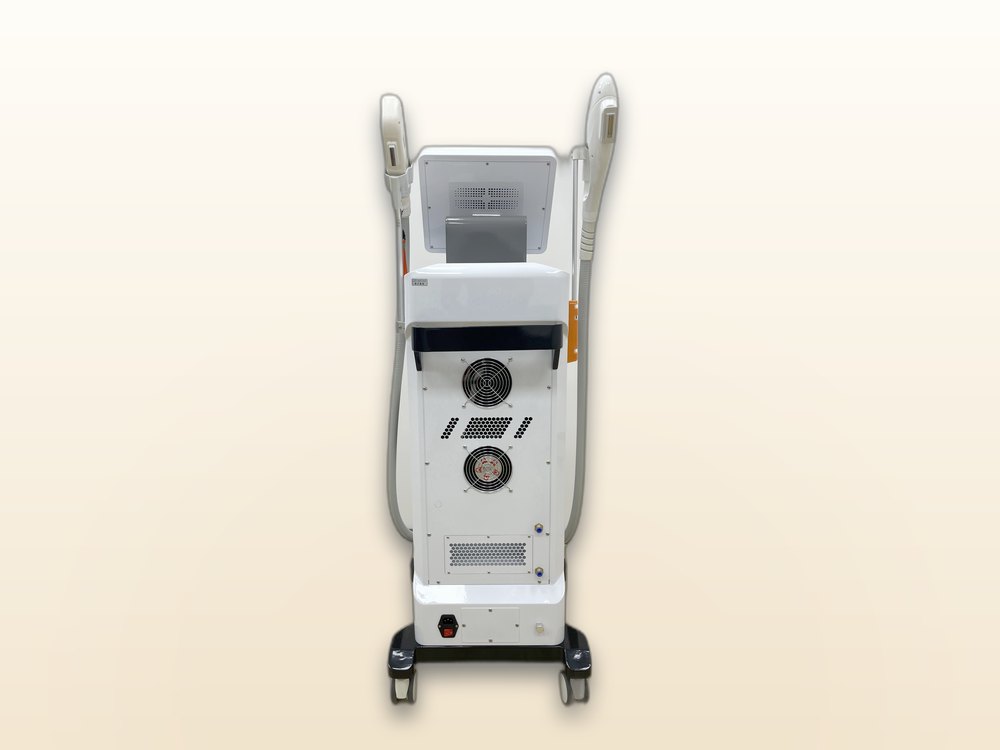
Milk Light DPL + NIR Photofacial
Frequently Asked Questions
Does 808 hair removal hurt?
Sapphire contact cooling pre-chills the skin, so most feel only light pricking and warmth; bony areas and the bikini line are slightly more sensitive.
How many sessions for clear results?
A standard course of 3-6 sessions at 4-8 week intervals; the follicle cycle prevents one-session clearance. Hormone-driven areas (upper lip, beard) may need more plus maintenance.
Is it permanent?
The compliant term is permanent hair reduction: after a full course most hairs stay gone long-term; fine vellus hairs may remain and hormonal shifts can recruit new follicles needing touch-ups.
Can I do it with a summer tan?
Defer until the tan fades; darker skin needs lower fluence or 1064 nm/long-pulse alternatives. Phototype assessment comes first.
Why do underarms respond faster than lower legs?
Underarm follicles are thick, melanin-rich and spend more time in anagen, so per-session clearance is higher; leg follicles are finer with more telogen.
Should I pluck before a session?
No — the laser needs melanin inside the follicle as its target. Only shave; shave 3-5 days before treatment.