
CO2 Fractional Laser: Ablative Resurfacing and Scar Rebuilding Explained
CO2 fractional laser vaporises tissue at 10600nm in a fractional pattern — the gold standard for acne scars, scars and photodamage resurfacing.
What Is a CO2 Fractional Laser?
The CO2 fractional laser operates at 10,600 nm, a wavelength absorbed strongly by tissue water. Where each beam lands, tissue is instantly vaporised, making it the classic ablative resurfacing laser. “Fractional” means the beam is split into hundreds of microbeams that treat only a fraction of the skin: between the microthermal treatment zones (MTZs), intact skin acts as a healing reservoir, dramatically improving recovery and safety over fully ablative resurfacing. It remains the gold standard for acne scars, surgical scars and photoageing, and most platforms add cutting and intimate-care modes.
How It Works: Vaporisation, Fractionation and Galvo Scanning
- Water absorption: 10600 nm is almost fully absorbed by intracellular water; tissue flashes past boiling point and vaporises, creating micro-channels with a ring of thermal contraction that tightens collagen
- Fractionation: the beam is arrayed from 6×6 upward with adjustable pitch (0.1-2.0 mm); MTZs under 1 mm heal by keratinocyte migration from surrounding skin — see fractional photothermolysis
- Galvo scanning: motorised mirrors place spots along preset patterns (square, round, hexagonal, triangular, custom) up to 20×20 mm; consistency depends on the scanning system — see galvo scanning systems
- Typical parameters: pulse energy 1-400 mJ, pulse width 0.1-10 ms, seven-articulated arm; interchangeable tips switch non-ablative, micro-ablative and deep-ablative depths, with pulsed cutting and intimate modes on many units
For choosing between ablative and non-ablative routes, see ablative versus non-ablative resurfacing.
Indications and Expected Outcomes
- Atrophic acne scars — the mainstay for rolling and boxcar types, typically 2-4 sessions; see acne-scar typing
- Photoageing: fine lines, roughness and overall texture lift
- Texture improvement of surgical scars and striae
- Ablative removal of benign epidermal growths (naevi, syringomas, milia) — physician-administered
- Intimate tightening and rejuvenation (dedicated modes, run within registered indications)
This is a rebuilding-class treatment: one session visibly improves, moderate-to-severe scars are managed over a 12-18 month cycle. Downtime and risks exceed non-ablative work — set expectations and recovery windows before consent.
Versus Erbium YAG and Non-Ablative Fractional
| Dimension | CO2 Fractional (10600 nm) | Er:YAG (2940 nm) | Non-Ablative Fractional (1470/1550 nm) |
|---|---|---|---|
| Water absorption | Strong | Very strong (~10-16× CO2; see 2940 nm Er:YAG) | Weak; slow dermal heating |
| Tissue response | Vaporisation + thermal contraction; good haemostasis | Clean ablation, minimal residual heat, less contraction | No vaporisation; dermal coagulation (see 1470 nm lasers) |
| Downtime | 5-7 days crusting | 3-5 days | Essentially none |
| Intensity | Deepest, most aggressive rebuilding | Fine superficial ablation | Gentle, progressive, multi-session |
| Best fit | Moderate-severe scars, photoageing | Superficial lesions, haemorrhage-sensitive sites | Mild-moderate texture, downtime-sensitive clients |
Treatment Flow and Number of Sessions
- Assessment: scar/photoageing grading, phototype and PIH screening; darker skin needs conservative settings
- Anaesthesia: topical 30-60 minutes; nerve blocks for deep work
- Treatment: pattern, energy and density per zone; full face 20-40 minutes
- Recovery: swelling days 1-3 → micro-crusts shed days 3-7 → erythema fades over weeks; strict moisturising and two months of sun discipline (see post-procedure sun protection)
Scar courses run 2-4 sessions at 2-3 month intervals; photoageing 1-2 sessions. Severe scarring follows an annual rebuilding plan rather than back-to-back aggressive passes.
Side Effects and Contraindications
- Expected recovery reactions: erythema, oedema and pinpoint crusting
- Disclosed risks: prolonged erythema (weeks), post-inflammatory hyperpigmentation (higher in darker phototypes), infection (herpes reactivation is most common — prophylaxis required), milia; hypertrophic scarring is rare
Contraindications: active acne inflammation or local infection; oral isotretinoin within 6 months; keloid tendency; poorly controlled diabetes or impaired healing; pregnancy and lactation; recent sun exposure; herpes history without antiviral prophylaxis; clients unable to accept social downtime (offer the non-ablative route instead).
End-Market Price Ranges
| Market | Reference range per full-face session | Notes |
|---|---|---|
| United States / Canada | $800-$2,500 | Physician-administered; scar packages common |
| Western Europe | €600-€2,000 | Southern Europe prices below the north |
| China (Tier 1-2 cities) | $200-$1,100 (¥1,500-¥8,000) | Tiered by depth and area; intimate care priced separately |
| Southeast Asia | $300-$1,000 | Medical-tourism resurfacing packages |
These are end-market retail references only; prices vary with ablation depth, provider credentials and region. They describe market pricing structure, carry no price commitment, and are unrelated to LEIJEX equipment pricing.
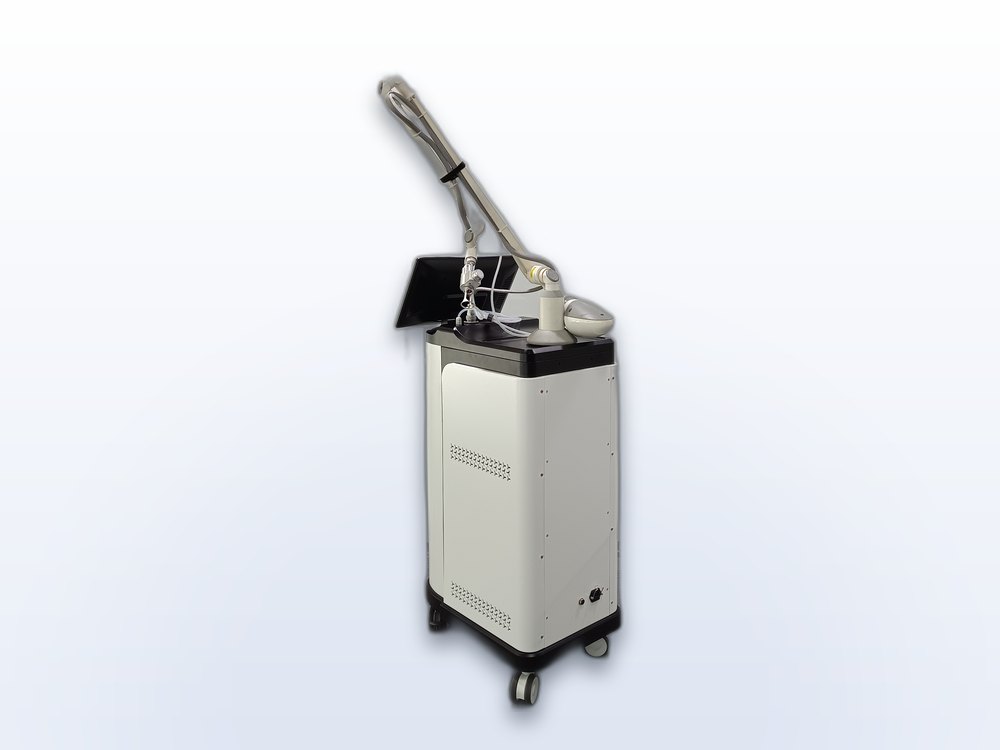
CO2 Fractional Laser
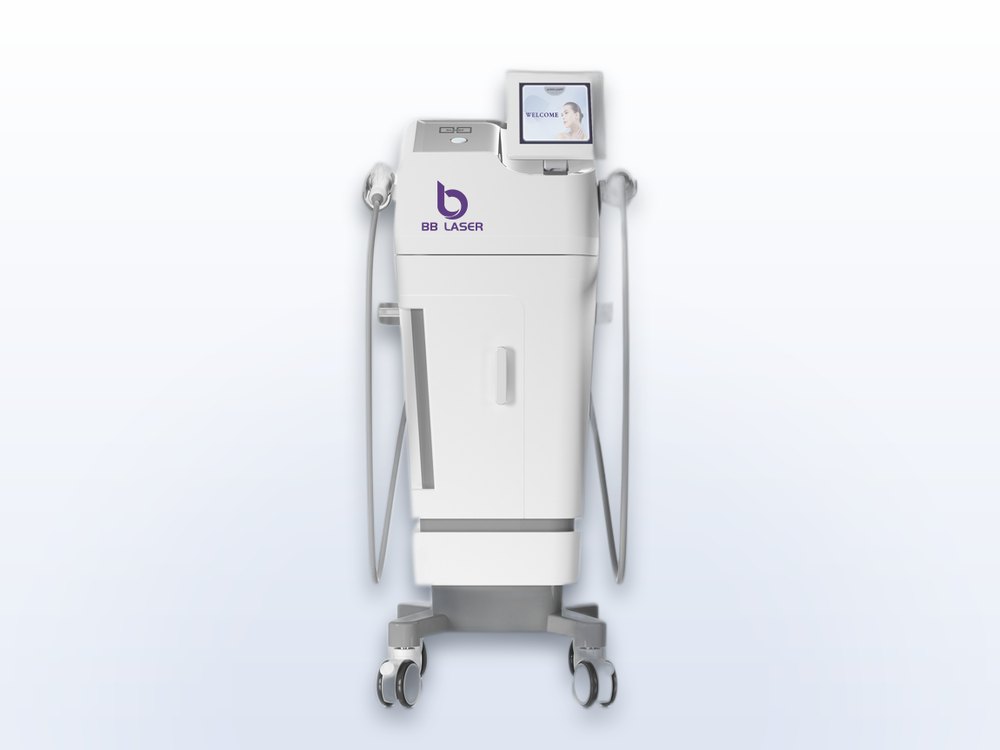
BB Laser Non-Ablative Fractional
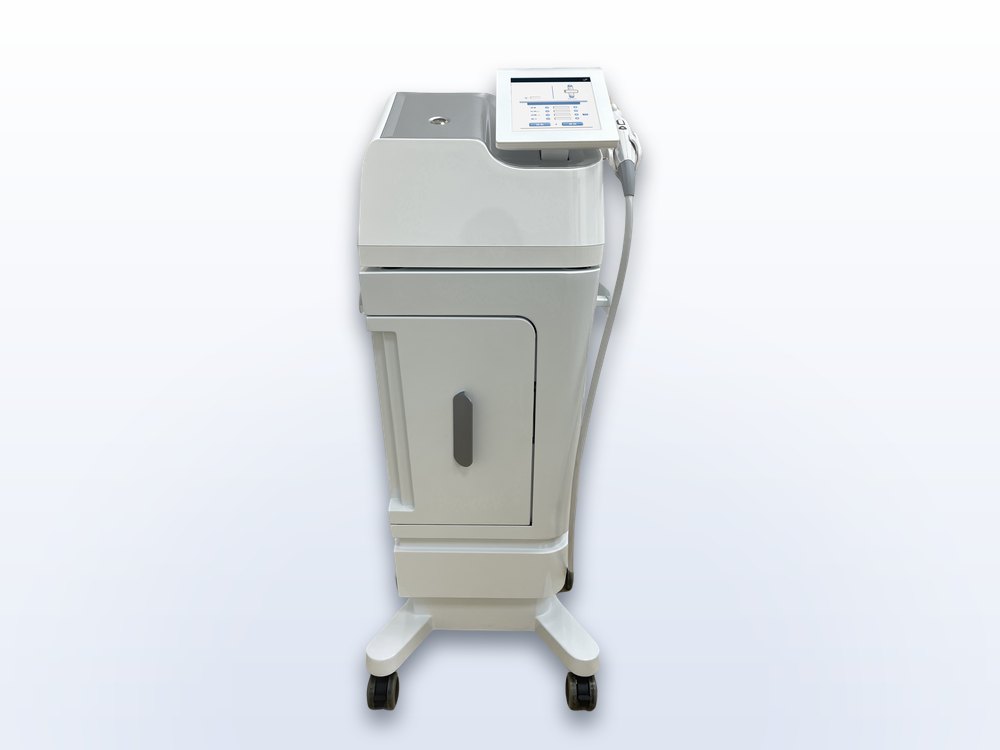
Gold RF Microneedling System
Frequently Asked Questions
CO2 fractional or picosecond/IPL — which is better?
Different jobs: CO2 rebuilds — first choice for scars and moderate-severe photoageing; picosecond/IPL handle pigment and shallow texture. Choose CO2 for deep scars, pigment-first clients choose the others; clinics often combine.
How long is the downtime?
Swelling 2-3 days, micro-crusts shedding days 3-7, erythema for weeks. Makeup and social life usually resume after 5-7 days; budget about a week.
How many sessions before scars improve visibly?
Usually 2-4 at 2-3 month intervals; rolling and boxcar types respond best, ice-pick needs TCA CROSS or microneedling RF. Judge on a 12-18 month cycle.
Will it scar or cause hyperpigmentation?
With proper parameters scarring is rare; PIH is possible in darker skin or with sun exposure — two months of strict photoprotection is essential. Herpes reactivation is the most common complication; use prophylaxis.
Can sensitive skin do it?
Stable mild sensitivity can try low energy; active sensitivity or rosacea flares should rebuild the barrier first or choose a non-ablative route.
CO2 or non-ablative fractional?
CO2 if you accept 5-7 days of downtime and want visible single-session change; non-ablative (1470/1550 nm) if you cannot, at the cost of more sessions.