
RF Skin Tightening: Collagen Heating from Monopolar to Multipolar
RF tightening heats the dermis and fibrous septa with high-frequency current — collagen contracts now and rebuilds over months.
What Is RF Skin Tightening?
Radiofrequency (RF) tightening uses high-frequency alternating current to heat the dermis and subcutaneous fibrous septa through Joule heating, contracting existing collagen immediately and triggering new collagen growth — a non-invasive to minimally invasive lifting pathway. It is the broadest energy ladder in the anti-ageing category: from Thermage-class monopolar platforms through bipolar and multipolar systems to needle-based microneedling RF.
How It Works: Heating the Dermis and Fibrous Septa
RF drives charged particles in tissue to oscillate at roughly 0.3-40 MHz, generating heat proportional to tissue resistance. Unlike lasers, RF heating does not depend on melanin or water absorption — the reason it is friendly to darker phototypes.
- Monopolar RF: current runs from the handpiece through the body to a distant return pad, heating deepest — the full dermis, septa and beyond; Thermage-class devices define the category (see monopolar RF)
- Bipolar RF: current shorts between two close electrodes — shallow, controlled, comfortable (see bipolar RF)
- Multipolar RF: three or more electrodes give even superficial heating, usually paired with vacuum and red light for body programmes (see multipolar RF)
- Vacuum RF: suction flattens the skin and stabilises the current path while improving comfort; a representative platform (Thermtech class) pairs a vacuum-RF handpiece with a 10 MHz DEP infusion handpiece, separate face/body parameter sets and three-level cooling
The physiology has two phases: above ~55°C the collagen triple helix breaks and contracts immediately (about 20-30%), then wound-healing responses build new collagen and elastin over 2-6 months — the full timeline in RF and collagen remodelling.
Indications and Expected Outcomes
- Early facial laxity: blurring jawline, descending mid-face, emerging nasolabial folds
- Fine lines and skin quality: periorbital lines, firmness and elasticity upkeep
- Body: postpartum abdominal laxity, arms and inner thighs
- Anti-ageing for darker phototypes: RF’s melanin-independence makes it a first-line route for Fitzpatrick III-V
Clients feel immediate tightening, structural improvement appears over 1-3 months, and results last 6-18 months depending on configuration and course density. RF is maintenance-class anti-ageing: severe laxity needs invasive alternatives, and claims of “replacing a facelift” are not appropriate.
Configurations and Selection Logic
| Configuration | Heating depth | Comfort | Typical positioning |
|---|---|---|---|
| Monopolar (return pad) | Deepest: dermis, septa, beyond | Painful; anaesthesia support | Flagship tightening |
| Bipolar | Shallow: superficial-mid dermis | High, essentially painless | Frequent maintenance, periorbital |
| Multipolar + vacuum | Dermis and superficial fat, even | High, warm sensation | Body programmes and packages |
| Vacuum RF (Thermtech class) | Dermis and septa, stable current path | High; vacuum analgesia | Face + body lifting dual programme |
| Microneedling RF | Intradermal points, 0.5-3 mm (see RF microneedling) | Manageable with topical anaesthesia | Scars, wrinkles, severe texture |
Anatomical depth planning in RF treatment depth; platform selection tree in RF platform selection.
Treatment Flow and Number of Sessions
- Assessment: laxity grading, implant screening (pacemakers/metal are contraindications), baseline photos
- Treatment: gliding plus focal passes over coupling medium; face 30-45 minutes, body areas 30-60 minutes
- Endpoint: warm skin with mild erythema; pain is not the endpoint
- Aftercare: no downtime; moisturise and protect from sun (see post-procedure sun protection)
Typical rhythm: an initial course of 4-6 weekly or biweekly sessions for bipolar/multipolar systems, or single high-energy sessions with annual maintenance for monopolar flagships — see RF tightening principles; upkeep every 1-3 months is common. Clinics often bundle RF with HIFU and infusion programmes.
Side Effects and Contraindications
- Common transient reactions: warmth and mild erythema fading within 1-2 hours; minor petechiae at vacuum sites
- Low-probability risks: burns or blisters from excessive parameters; fat atrophy from overtreatment — caution in low-fat facial zones; see RF treatment myths
Contraindications: pacemakers, defibrillators or metal implants; pregnancy and lactation; infection, open wounds or severe cystic acne in the area; recent fillers, threads or facial surgery within their recovery window (heat-sensitive fillers — physician judgement required); poorly controlled systemic disease.
End-Market Price Ranges
| Market | Reference range per facial session | Notes |
|---|---|---|
| United States / Canada | $400-$3,000 | Thermage-class single sessions at the top; bipolar sold as monthly packages |
| Western Europe | €300-€2,000 | Varies by configuration and clinic positioning |
| China (Tier 1-2 cities) | $70-$1,100 (¥500-¥8,000) | Flagship monopolar vs maintenance bipolar pricing gap is wide; course cards standard |
| Southeast Asia | $150-$1,200 | Bundle sales common |
These are end-market retail references only; prices vary with configuration, provider credentials and course structure. They describe market pricing structure, carry no price commitment, and are unrelated to LEIJEX equipment pricing.
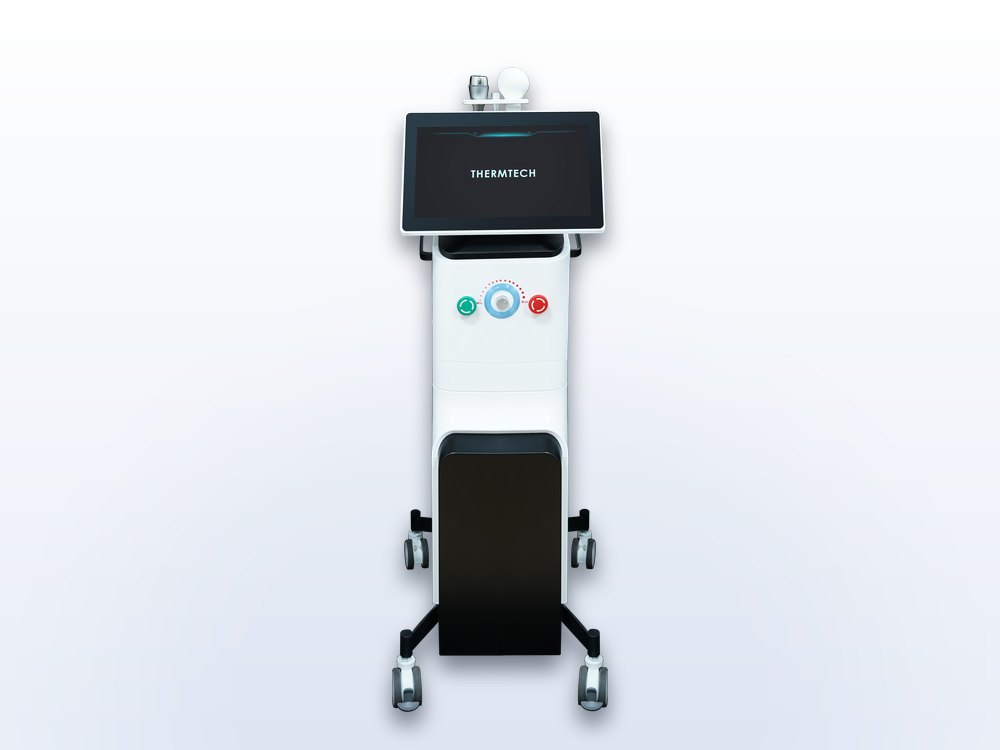
THERMTECH Vacuum RF Tightening
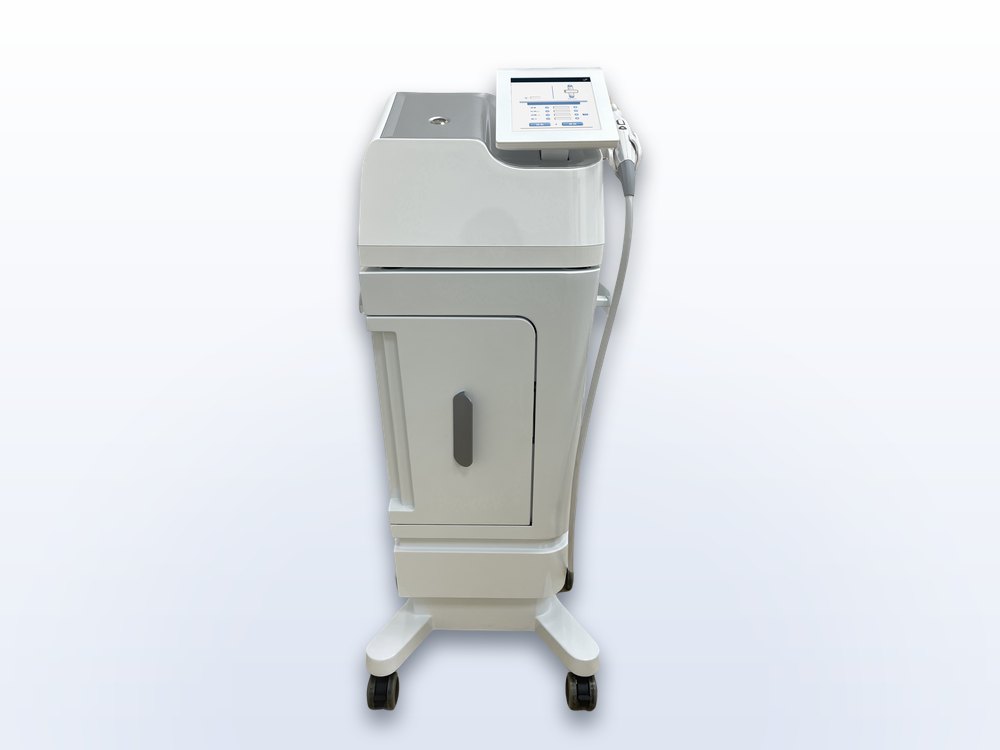
Gold RF Microneedling System
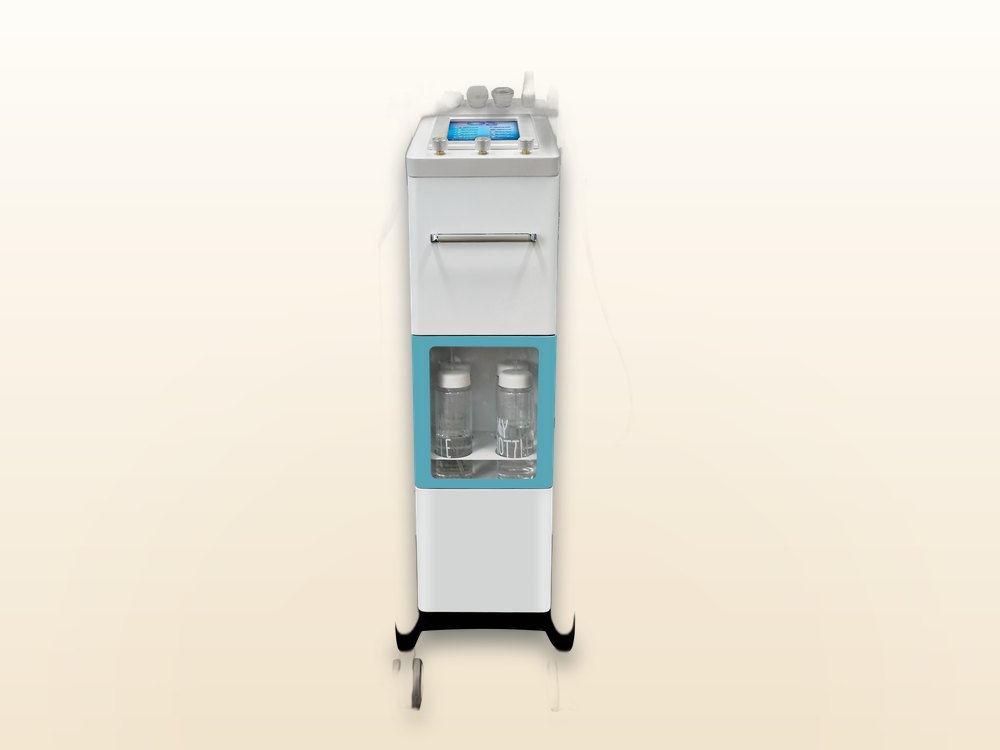
Oscar Skin Management Platform
Frequently Asked Questions
How many RF sessions until results show?
Immediate tightness is instant; structural change builds over 1-3 months. Bipolar/multipolar courses run 4-6 weekly or biweekly sessions; monopolar flagships use single high-energy sessions with annual upkeep.
RF or HIFU — how to choose?
RF heats the dermis and septa evenly: texture-tightening maintenance, friendly to darker skin. HIFU targets the SMAS for contour lifting. Clinics combine: HIFU for contour, RF for upkeep.
Can overuse hollow the face?
Not at proper parameters and intervals; chronic overheating of low-fat zones (sub-zygomatic, jawline) carries theoretical fat-atrophy risk. Follow protocols and monitor.
How long do results last?
About 6-18 months depending on configuration, age and course density; regular maintenance extends it.
Is it safe for darker skin?
Yes — RF heating is melanin-independent, making it first-line for Fitzpatrick III-V; energy starting points and endpoints are operator-adjusted.
Any rest or dietary restrictions after?
None; normal activity the same day. Avoid saunas, steam rooms and intense exercise for 24 hours.