
Gold RF Microneedling: Collagen Remodelling and Scar Repair Explained
Gold RF microneedling delivers RF energy from insulated gold-plated needle tips straight into the dermis, remodelling collagen for scars, pores and firmness.
What Is Gold RF Microneedling?
Gold RF microneedling combines an insulated micro-needle array with fractional radiofrequency: gold-plated needles penetrate to a set dermal depth and RF energy is released only from the exposed needle tips, creating a lattice of thermal zones inside the dermis that stimulates collagen and elastin remodelling. The gold plating gives the needles both their colour and high biocompatibility. It has become a workhorse for acne-scar, pore and anti-ageing programmes in clinics worldwide.
How It Works: Delivering RF Energy into the Dermis
Unlike external (transcutaneous) RF, microneedling RF bypasses the impedance of the epidermis and places the heat exactly where it is needed. Typical device configuration:
- Insulated needles: about 1.5 mm long, 0.22 mm shaft, 0.1 mm tip; only the 0.3-0.5 mm tip segment emits energy while the insulated shaft protects the epidermis — minimal crusting and low pigmentation risk.
- Vacuum-assisted stamping: suction stabilises the skin before needle deployment, improving depth consistency and reducing pain and bleeding.
- Fractional heating: RF creates millimetre-scale coagulation zones around each tip while untreated tissue accelerates healing — the same logic as fractional photothermolysis.
- Depth and modes: adjustable depth of 0.5-3.0 mm by area (0.5-1.0 mm forehead/eyes, 1.0-1.5 mm face, 1.5-2.0 mm scars), with monopolar/bipolar modes and multi-level energy for zones from periorbital corners to large body areas.
Indications and Expected Outcomes
- Atrophic acne scars — one of the best-evidenced indications; map against scar morphology first (see atrophic acne scars)
- Enlarged pores and oily skin
- Wrinkles and laxity: crow’s feet, forehead lines, nasolabial folds, neck lines
- Softening of striae (position expectations as reduction, not removal — see stretch marks)
- Adjunctive control of active acne
Results are progressive: most clients see texture and scar improvement from 4-6 weeks, building over 3-6 months as collagen remodels. Improvement is visible after one session and larger after a proper course; treat any “one-session resurfacing” promise with caution.
Versus Fractional Lasers
Three tool routes compete in the scar-and-pore space; clinics choose by scar type and downtime tolerance:
| Dimension | Gold RF Microneedling | CO2 Fractional Laser | Non-Ablative Fractional |
|---|---|---|---|
| Energy path | Needle tips deliver RF inside the dermis, bypassing epidermis | Epidermal vaporisation then dermal heating (see CO2 fractional laser) | Epidermis intact; coagulation within dermis (see ablative vs non-ablative) |
| Epidermal injury | Pinpoint marks, essentially no crusting | Micro-crusts for 3-7 days | None; mild erythema |
| Downtime | 1-3 days of redness | 5-7 days | Essentially none |
| PIH risk | Low (favourable for darker skin types) | Moderate; caution in darker phototypes | Low |
| Best fit | Scars + pores + active acne, tightening | Moderate-severe scars, photodamage | Mild-moderate texture, periorbital (e.g. 1470 nm platforms) |
Treatment Flow and Number of Sessions
- Assessment: scar typing and skin evaluation; topical anaesthetic for 30-60 minutes.
- Treatment: tip selection and depth per zone; full face about 15-20 minutes.
- Aftercare: mild redness for 1-3 days; cleanse after 24 hours; moisturise and protect from sun strictly (see post-procedure sun protection).
The standard course is 3-4 sessions about one month apart (respecting minimum 10-day intervals for the same area); improvement continues for 1-6 months after the final session. Scar rebuilding is usually managed on a 12-18 month cycle — see scar typing and strategy.
Side Effects and Contraindications
- Common transient reactions: heat-prickling during treatment, 1-3 days of redness, occasional pinpoint bruising
- Low-probability risks: scratches or hot spots from poor technique; infection or PIH with poor aftercare
- As with all minimally invasive treatments, strict asepsis and single-use needle management are mandatory (see infection prevention)
Contraindications: isotretinoin or ablative peels within 6 months; active herpes, broken skin or infection in the area; malignant or suspicious skin lesions; pacemakers/defibrillators/metal implants; bleeding disorders or anticoagulant therapy; pregnancy, lactation and menstruation; keloid tendency and poorly controlled diabetes; imminent intense sun exposure.
End-Market Price Ranges
| Market | Reference range per full-face session | Notes |
|---|---|---|
| United States / Canada | $600-$1,800 | Morpheus8-class devices anchor the market |
| Western Europe | €500-€1,500 | Medical-grade clinics price above average |
| China (Tier 1-2 cities) | $200-$850 (¥1,500-¥6,000) | Often priced per tip; course cards common for scars |
| Southeast Asia | $300-$900 | Medical-tourism packages frequent |
These are end-market retail references only; prices vary with provider credentials, tip consumables and protocols. They describe market pricing structure, carry no price commitment, and are unrelated to LEIJEX equipment pricing.
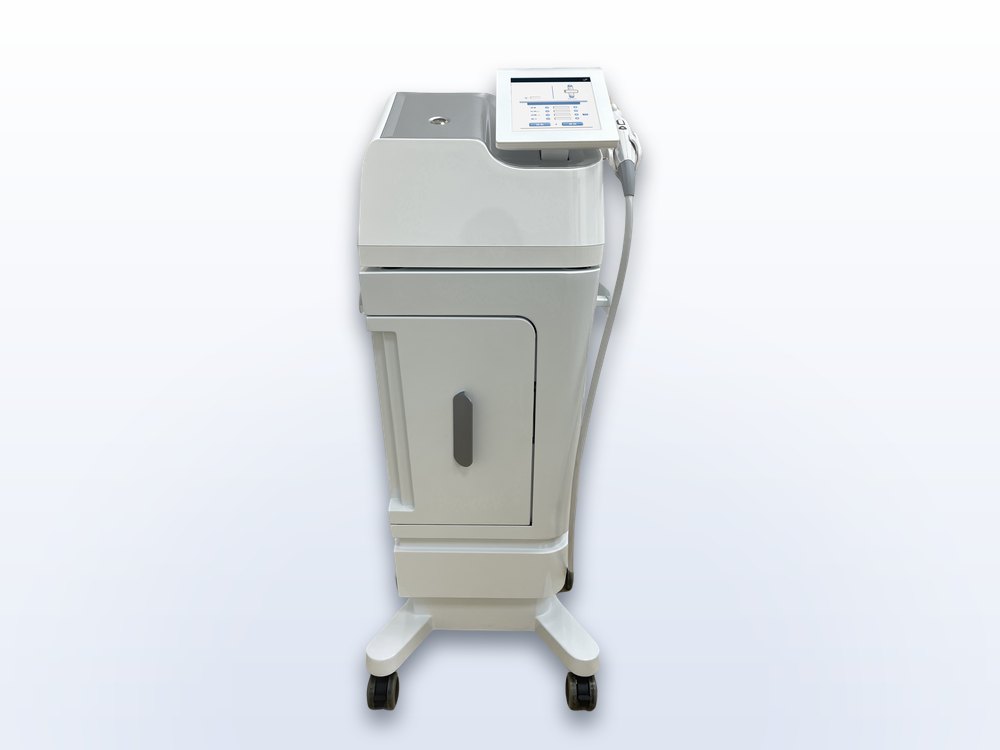
Gold RF Microneedling System
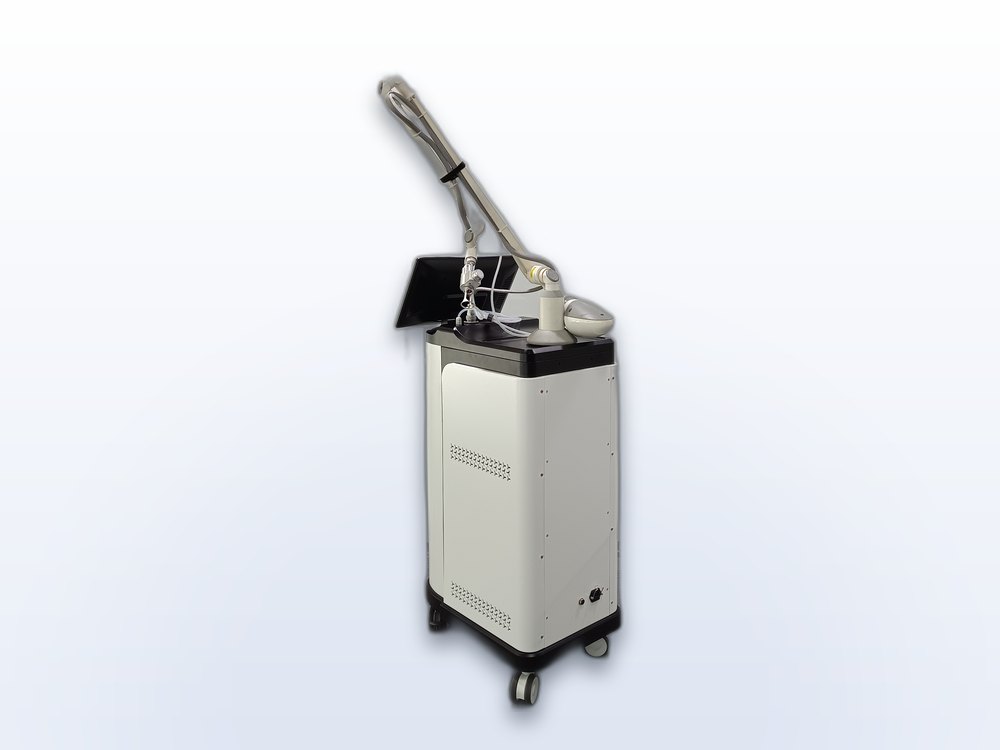
CO2 Fractional Laser
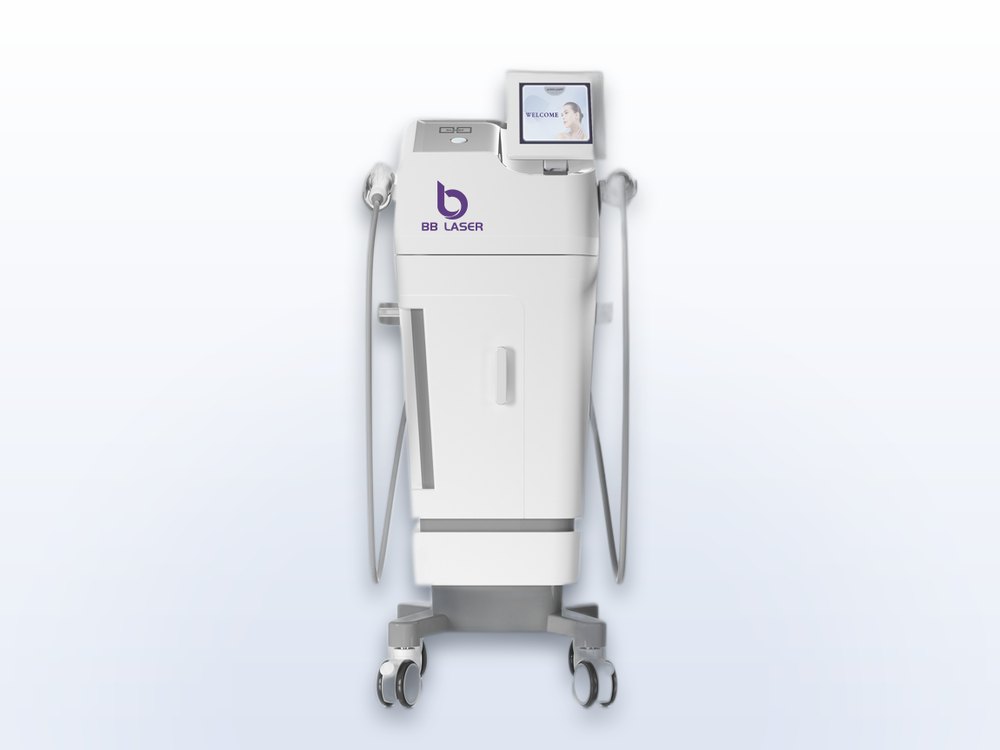
BB Laser Non-Ablative Fractional
Frequently Asked Questions
How is gold RF microneedling different from regular microneedling?
Regular microneedling creates physical channels; RF microneedling releases energy from the needle tips to heat the dermis, driving stronger remodelling. Gold plating improves conductivity and biocompatibility; insulated shafts spare the epidermis.
How much can one session improve acne scars?
Texture and shallow scars improve from one session; a proper course of 3-4 delivers moderate-to-significant improvement for most. Results vary by scar type; ice-pick scars usually need combination approaches.
Is post-inflammatory hyperpigmentation likely?
Energy bypasses the epidermis, so PIH risk is lower than with ablative lasers and darker phototypes fare well; infection, overtreatment or sun can still trigger it — sun care and moisturising are mandatory.
When do pores look smaller?
Often visible after 1-2 sessions and clearer by 2-3 months as collagen remodels; oil-control skincare extends the results.
Is it painful, and what is the downtime?
After topical anaesthesia most people feel heat-prickling only. Mild redness lasts 1-3 days; cleansing and makeup resume at 24 hours — short social downtime.
Can it be done on active acne?
Yes, as an adjunct for sebum and bacteria control, but acutely inflamed lesions should be medically controlled first; the pre-treatment assessment decides.