
LED Light Therapy: Photobiomodulation and Post-Procedure Repair Explained
LED therapy uses specific wavelengths to modulate cell function — blue for bacteria, red for repair, yellow for redness — with zero trauma.
What Is LED Light Therapy?
LED light therapy (photobiomodulation) illuminates the skin with specific wavelengths from light-emitting diodes. Photons absorbed by intracellular chromophores — notably mitochondrial cytochrome c oxidase — modulate ATP synthesis, reactive oxygen species and inflammatory signalling, supporting repair, calming and collagen metabolism. It involves no thermal injury: a heat-free “care-class” energy technology that serves as the universal companion to post-procedure recovery and daily salon maintenance.
How It Works: Wavelength Selects the Target
Wavelength is the first decision variable — each band has its own penetration depth and chromophore. Using a representative five-band panel (Venus-class) as an example:
- Blue ~415-430 nm: activates porphyrins in Cutibacterium acnes, producing singlet oxygen — surface antibacterial and sebum control (see acne management)
- Green ~520-530 nm: an adjunct band for brightening and post-acne marks
- Yellow ~585-590 nm: calms redness and supports barrier recovery, common after procedures
- Red ~620-660 nm: reaches the dermis, supports fibroblast activity and wound healing — the core repair band
- Near-infrared ~830-880 nm: deepest penetration, deep anti-inflammatory and repair, usually paired with red
Implementation quality matters: constant-voltage drive with rectangular-wave output keeps intensity stable, and mask-style panels cover the whole face in 10-20 minutes. For the difference against heat-based near-infrared treatment, see NIR heating.
Indications and Expected Outcomes
- Post-procedure erythema and wound-support (the standard companion after CO2 fractional or microneedling)
- Acne support: blue for bacteria plus red for inflammation, as part of a drug/device plan
- Gentle upkeep during sensitive-skin and barrier-recovery phases
- Salon-side retention programmes: zero trauma, zero downtime
Set expectations honestly: LED is an adjunct-class technology with the strongest evidence in wound-healing support and mild-to-moderate acne; alone it does little for wrinkles or pigment. Design it as the fixed closing step of a programme rather than a standalone hero — positioning analysis in LED as an adjunct. Typical delivery is 10-20 minutes per session, 2-3 times weekly, in 8-12 session cycles.
Versus Other Optical Technologies
| Dimension | LED | IPL/OPT | Lasers |
|---|---|---|---|
| Light | Monochromatic, non-coherent, low power | Broadband non-coherent, high power | Monochromatic coherent, high power |
| Mechanism | Photobiomodulation, no thermal injury | Photothermal coagulation (see OPT/DPL photofacial) | Vaporisation/fragmentation/coagulation (see laser-tissue interaction) |
| Operator threshold | Lowest; within local scope of practice | Trained operators | Physician or trained operator |
| Downtime | None | None to hours | Days, by type |
| Single-session intensity | Gentle; needs frequent visits | Moderate | High; fewer sessions |
Against injury-repair routes like RF and ultrasound, LED is the zero-injury care route, and the two combine naturally post-procedure; the gap between home devices and professional systems in home vs professional devices.
Treatment Flow and Course Design
- Assessment: skin status and photosensitivity screening; cleanse and remove makeup
- Session: select band combinations (red + near-infrared post-procedure; add blue for acneic skin); 10-20 minutes under the panel with eye shields
- Pairing: apply serums or masks before irradiation on dry skin; moisturise after
- Rhythm: post-procedure — single session or three consecutive days; maintenance — 2-3 sessions weekly for 8-12 weeks, then upkeep frequency
Dosing still follows rules: energy density and session length accumulate, and overuse can dry or sensitise the skin. Follow the device protocol and log skin responses.
Side Effects and Contraindications
- Common transient reactions: dry-eye sensation (wear opaque goggles), mild post-session dryness
- Low-probability risks: erythema flare or itching in photosensitive individuals; warmth discomfort on poorly regulated units
Contraindications: photosensitive disorders (lupus, porphyria) or photosensitising medication; pregnancy (avoid the abdominal area, use caution generally); open wounds without medical clearance; recent photosensitising drugs (some antibiotics, isotretinoin); seizure history — avoid flicker modes; skin malignancies per physician judgement.
End-Market Price Ranges
| Market | Reference range per session | Notes |
|---|---|---|
| United States / Canada | $25-$150 | Commonly priced as a programme add-on |
| Western Europe | €20-€100 | Mainstream in beauty-salon channels |
| China (Tier 1-2 cities) | $11-$70 (¥80-¥500) | Membership packages; often bundled free post-procedure |
| Southeast Asia | $10-$60 | High-frequency, low-price traffic programmes |
These are end-market retail references only; prices vary with provider type and programme bundling. They describe market pricing structure, carry no price commitment, and are unrelated to LEIJEX equipment pricing.
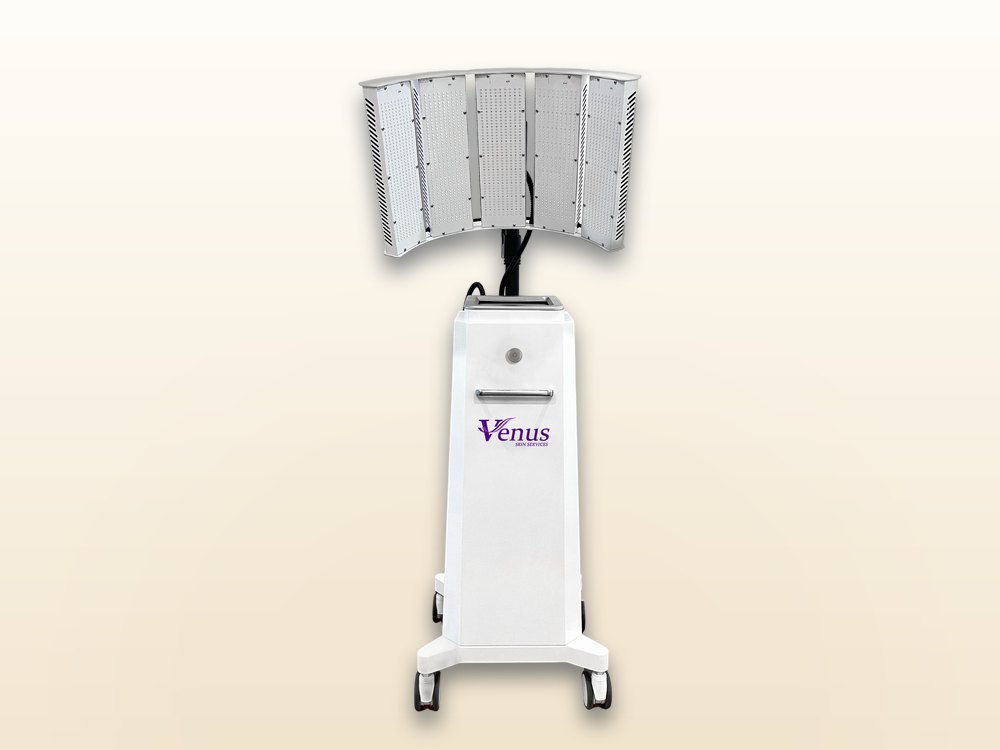
VENUS LED Light Therapy Panel
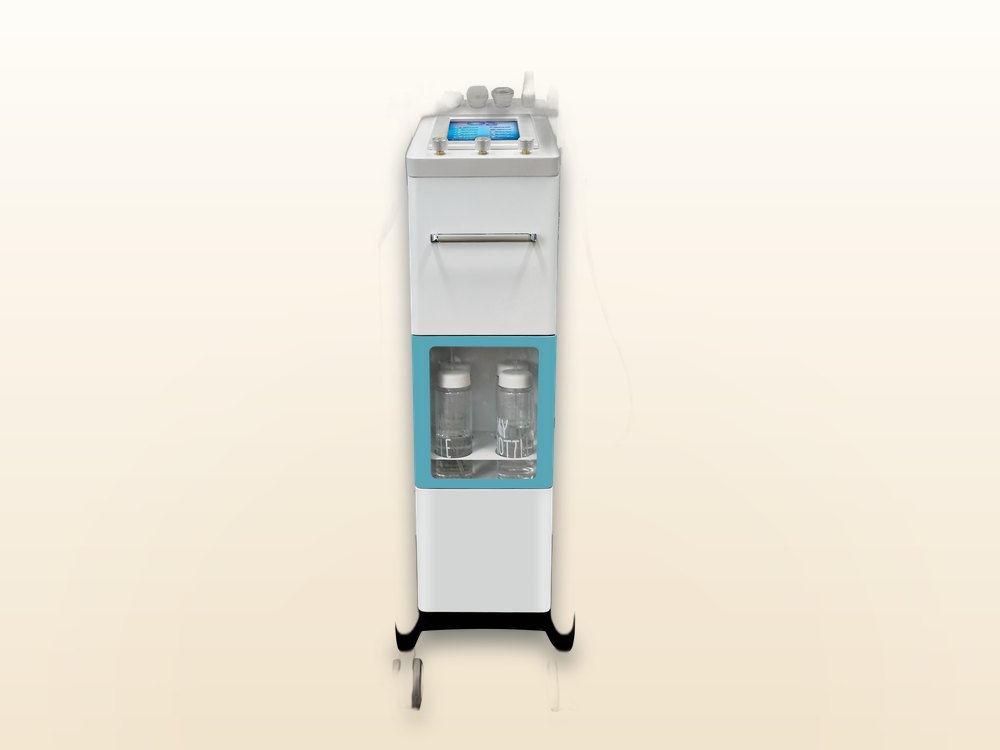
Oscar Skin Management Platform
Frequently Asked Questions
Does LED therapy actually work?
The strongest evidence covers wound-healing support and mild-to-moderate acne; overall skin benefits are gentle and cumulative. It is an adjunct, not a standalone hero.
When to use red, blue or yellow light?
Red (plus near-infrared) for post-procedure repair and inflammation; blue added for acne; yellow for calming redness. Most platforms combine bands.
How soon are results visible?
Post-procedure calming is felt immediately; acne support is judged over 4-8 weeks; texture changes after an 8-12 session cycle.
Any side effects?
Very safe at proper doses; dry-eye sensation and mild dryness can occur. Photosensitive individuals and photosensitising drugs are excluded; wear opaque goggles.
Can home LED masks replace professional panels?
Home units run lower power density with uneven wavelength control — fine for upkeep; professional panels' power, uniformity and band purity set the efficacy ceiling.
What skincare pairs with LED?
Cleanse before, layer repair serums (applied dry), moisturise and protect after; keep peels and actives on a separate schedule.