
RF Skin Tightening: Collagen Heating from Monopolar to Multipolar
RF tightening heats the dermis and fibrous septa with high-frequency current — collagen contracts now and rebuilds over months.
What Is RF Skin Tightening?
Radiofrequency (RF) tightening uses high-frequency alternating current to heat the dermis and subcutaneous fibrous septa through Joule heating, contracting existing collagen immediately and triggering new collagen growth — a non-invasive to minimally invasive lifting pathway. It is the broadest energy ladder in the anti-ageing category: from Thermage-class monopolar platforms through bipolar and multipolar systems to needle-based microneedling RF.
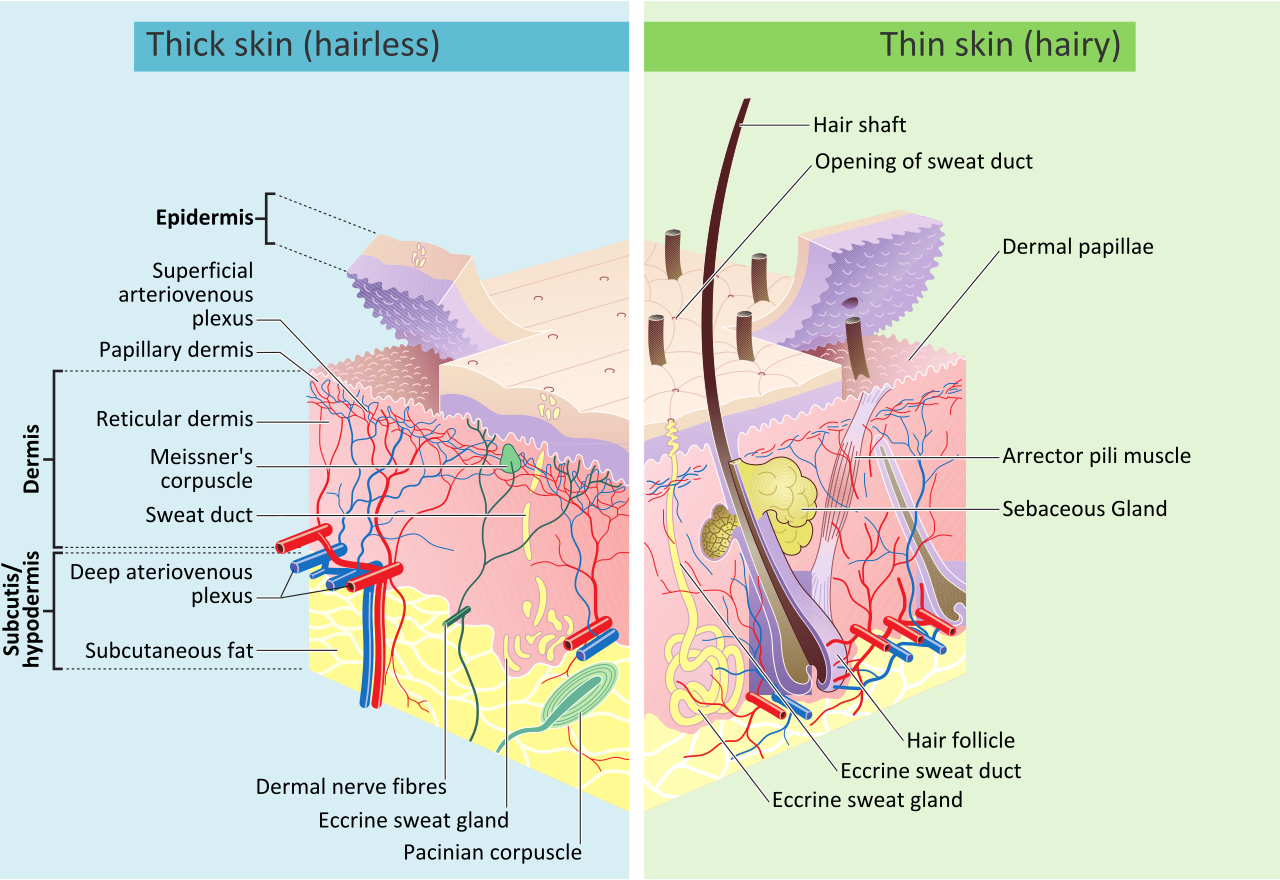
How It Works: Heating the Dermis and Fibrous Septa
RF drives charged particles in tissue to oscillate at roughly 0.3-40 MHz, generating heat proportional to tissue resistance. Unlike lasers, RF heating does not depend on melanin or water absorption — the reason it is friendly to darker phototypes.
- Monopolar RF: current runs from the handpiece through the body to a distant return pad, heating deepest — the full dermis, septa and beyond; Thermage-class devices define the category (see monopolar RF)
- Bipolar RF: current shorts between two close electrodes — shallow, controlled, comfortable (see bipolar RF)
- Multipolar RF: three or more electrodes give even superficial heating, usually paired with vacuum and red light for body programmes (see multipolar RF)
- Vacuum RF: suction flattens the skin and stabilises the current path while improving comfort; a representative platform (Thermtech class) pairs a vacuum-RF handpiece with a 10 MHz DEP infusion handpiece, separate face/body parameter sets and three-level cooling
The physiology has two phases: above ~55°C the collagen triple helix breaks and contracts immediately (about 20-30%), then wound-healing responses build new collagen and elastin over 2-6 months — the full timeline in RF and collagen remodelling.
Indications and Expected Outcomes
- Early facial laxity: blurring jawline, descending mid-face, emerging nasolabial folds
- Fine lines and skin quality: periorbital lines, firmness and elasticity upkeep
- Body: postpartum abdominal laxity, arms and inner thighs
- Anti-ageing for darker phototypes: RF’s melanin-independence makes it a first-line route for Fitzpatrick III-V
Clients feel immediate tightening, structural improvement appears over 1-3 months, and results last 6-18 months depending on configuration and course density. RF is maintenance-class anti-ageing: severe laxity needs invasive alternatives, and claims of “replacing a facelift” are not appropriate.
Configurations and Selection Logic
| Configuration | Heating depth | Comfort | Typical positioning |
|---|---|---|---|
| Monopolar (return pad) | Deepest: dermis, septa, beyond | Painful; anaesthesia support | Flagship tightening |
| Bipolar | Shallow: superficial-mid dermis | High, essentially painless | Frequent maintenance, periorbital |
| Multipolar + vacuum | Dermis and superficial fat, even | High, warm sensation | Body programmes and packages |
| Vacuum RF (Thermtech class) | Dermis and septa, stable current path | High; vacuum analgesia | Face + body lifting dual programme |
| Microneedling RF | Intradermal points, 0.5-3 mm (see RF microneedling) | Manageable with topical anaesthesia | Scars, wrinkles, severe texture |
Anatomical depth planning in RF treatment depth; platform selection tree in RF platform selection.
Treatment Flow and Number of Sessions
- Assessment: laxity grading, implant screening (pacemakers/metal are contraindications), baseline photos
- Treatment: gliding plus focal passes over coupling medium; face 30-45 minutes, body areas 30-60 minutes
- Endpoint: warm skin with mild erythema; pain is not the endpoint
- Aftercare: no downtime; moisturise and protect from sun (see post-procedure sun protection)
Typical rhythm: an initial course of 4-6 weekly or biweekly sessions for bipolar/multipolar systems, or single high-energy sessions with annual maintenance for monopolar flagships — see RF tightening principles; upkeep every 1-3 months is common. Clinics often bundle RF with HIFU and infusion programmes.
Side Effects and Contraindications
- Common transient reactions: warmth and mild erythema fading within 1-2 hours; minor petechiae at vacuum sites
- Low-probability risks: burns or blisters from excessive parameters; fat atrophy from overtreatment — caution in low-fat facial zones; see RF treatment myths
Contraindications: pacemakers, defibrillators or metal implants; pregnancy and lactation; infection, open wounds or severe cystic acne in the area; recent fillers, threads or facial surgery within their recovery window (heat-sensitive fillers — physician judgement required); poorly controlled systemic disease.
End-Market Price Ranges
| Market | Reference range per facial session | Notes |
|---|---|---|
| United States / Canada | $400-$3,000 | Thermage-class single sessions at the top; bipolar sold as monthly packages |
| Western Europe | €300-€2,000 | Varies by configuration and clinic positioning |
| China (Tier 1-2 cities) | $70-$1,100 (¥500-¥8,000) | Flagship monopolar vs maintenance bipolar pricing gap is wide; course cards standard |
| Southeast Asia | $150-$1,200 | Bundle sales common |
These are end-market retail references only; prices vary with configuration, provider credentials and course structure. They describe market pricing structure, carry no price commitment, and are unrelated to LEIJEX equipment pricing.
 Leijex Medical